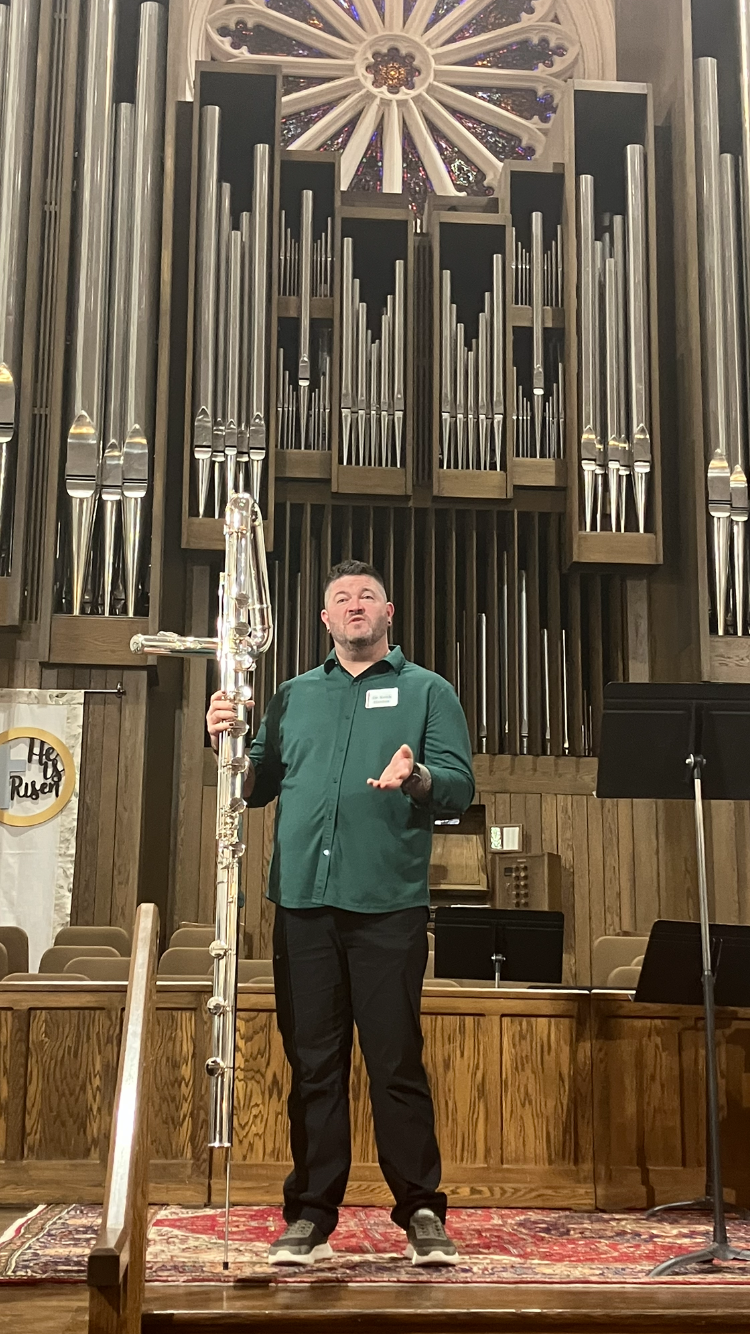
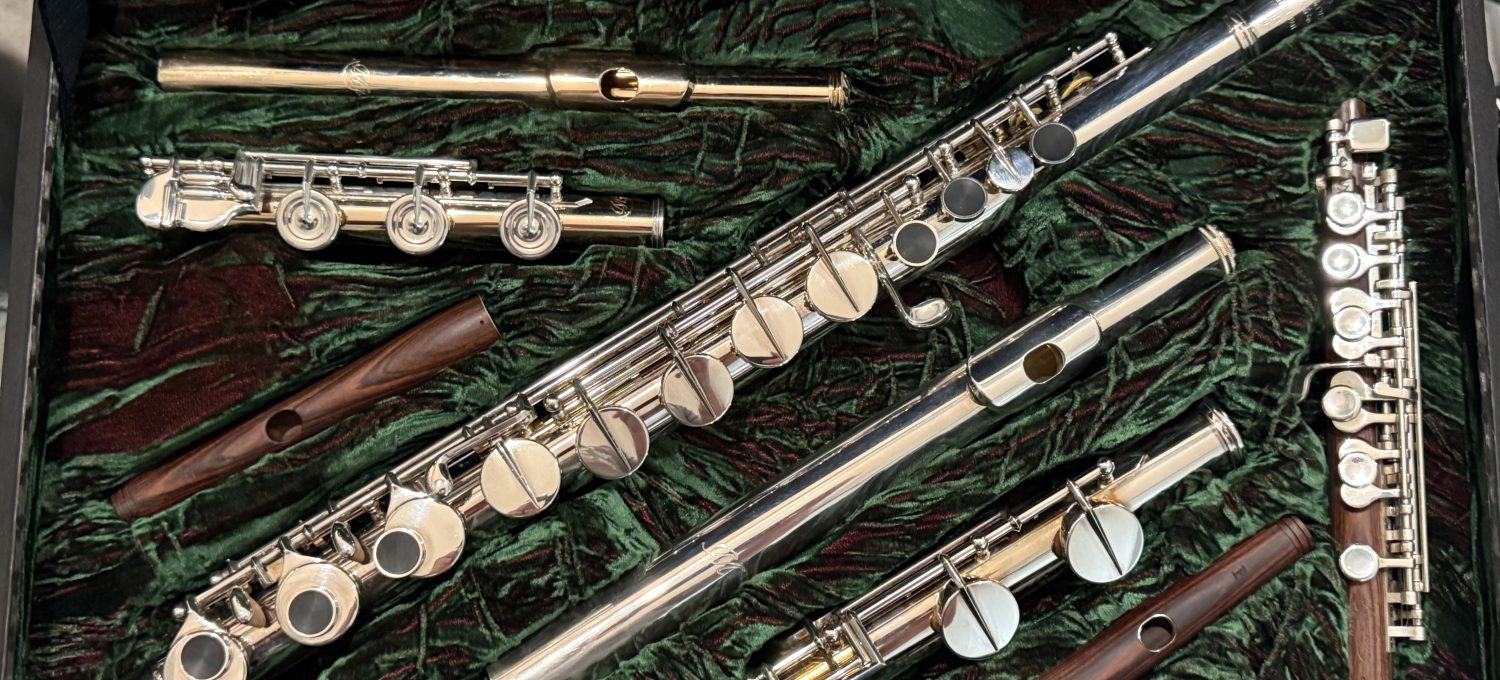
I mentioned in an article that I wrote years ago that my first experience with alto and bass flute was during my undergraduate years. I must have done okay because I continued to be asked to play them semester after semester. I guess all that work and a teacher who recognized something in me paid off.
I now find myself a piccolo artist for Pettry Piccolos, a clinician for Miyazawa Flutes, and a Low Flutes Artist for Trevor James. I must be a glutton for punishment because I find myself programming recitals that include works for piccolo, C flute, alto flute, bass flute, and contrabass flute on the same program. I’ve had numerous people comment about how impressed they are that I can switch between all of those instruments without any issue, and I am often asked how I am able to adapt so quickly. This question got me thinking about how I learned to adjust so quickly and what tips would be helpful for others. Most of us are fairly used to switching from flute to piccolo on most days, but there are bigger fish in the sea…or bigger flutes in the choir.
I remember the early years of switching between piccolo, C flute, and alto. I was preparing a work by Alec Wilder where I had a movement on each instrument and the last movement constantly switched back and forth between all three with hardly enough time to swap instruments let alone adjust. I remember how large the alto felt and then how small the piccolo felt as I would bounce between them. I felt like my arms were too short, or too long and it was just an awkward feeling like I wasn’t in my own body. I remember how much I had to practice for those changes just to get the first note to speak properly and all the preparation of choreographing each instrument switch to not mistakenly grab the wrong one. So, here is a bit of my experience and what I found worked for me.
First, I had to identify the differences between the instruments. I know this seems silly, but it is actually something I needed to do in my head—and occasionally out loud—to prepare myself. When I would reach for the piccolo, I would tell myself that the playing position is going to feel close, the embouchure would feel firm, and the airstream would be focused and fast. When I picked up the alto, I thought about how my arms would extend farther, causing the flute to feel even heavier than it seemed. The alto embouchure was more relaxed and rounded with a much slower and wider air stream. This mental preparation was very helpful, but I still felt an awkward physical dissonance with the instrument swaps. So, I began to explore them from a different perspective.
The second approach that I took was internalizing what I was feeling. Every time I would pick up one of the instruments, I would do a simple body scan to identify what it “felt” like to hold the instruments. I would play scales and just “feel” what it felt like to play each instrument. I also listened closely. I wanted to teach my ear what to expect when my body was feeling the weight of the alto or bass, or the closer position of playing the piccolo. I thought about what my hands and fingers felt like—close together, farther apart, a more open or closed hand position. This took time, but I eventually built a tactile muscle memory and was able to connect the feeling with the expectation rather than just kind of wing it until I settled in. Once that muscle memory is built, it almost becomes like switching a light switch on and off.
Then, we come to contrabass and double contrabass. As these are the only two flutes I play vertically, the only frame of reference I had was flashing back to my days as a woodwind doubler (which, just to be clear, encounter the same issues as above). I found that the finger buttons on my contra felt oddly like when I played tenor sax, and the size of the instrument and timbre felt more like bassoon. I can’t tell you how many times I tried to finger a saxophone C or flick the whisper key to play G. I realized that I was accessing those muscle memories from other instruments because that is what my brain could relate to in the new playing position even though it was just a big flute. I took time to revisit my steps mentioned previously and went through that process with the largest flutes in my collection. It took time, but it worked, and I no longer have the physical confusion of the tenor sax and bassoon crossovers on contrabass flute.
As for my embouchure, I try to maintain a relaxed and flexible embouchure so that it will adjust quickly. Playing too tight on piccolo will result in lack of response on bass. You must find the balance of what feels natural and relaxed. I think about the feeling of the shape of my aperture and the vowel formations that I use on each instrument. I also mentally prepare that I will likely develop double vision of the conductor if I am on double contrabass for too long. So far, focusing on the conductor in the middle seems to get me through my double contra duty.
In case it needs to be said, it is still best to just practice going between the instruments. It builds and strengthens the cognitive and tactile relationships of the similarities and differences. I also prepare for my recitals by playing the program in performance order. I do sometimes substitute or swap pieces or practice repertoire for one instrument on the other just to keep the fluidity of the muscle memory. I also make it a point to take the 20–30 seconds I need to make sure that the stand is the right height, the peg is in a comfortable position, and that I can reach my foot pedal for my tablet. Even those 30 seconds can really help you to focus and center as you shift from one instrument to the next.