
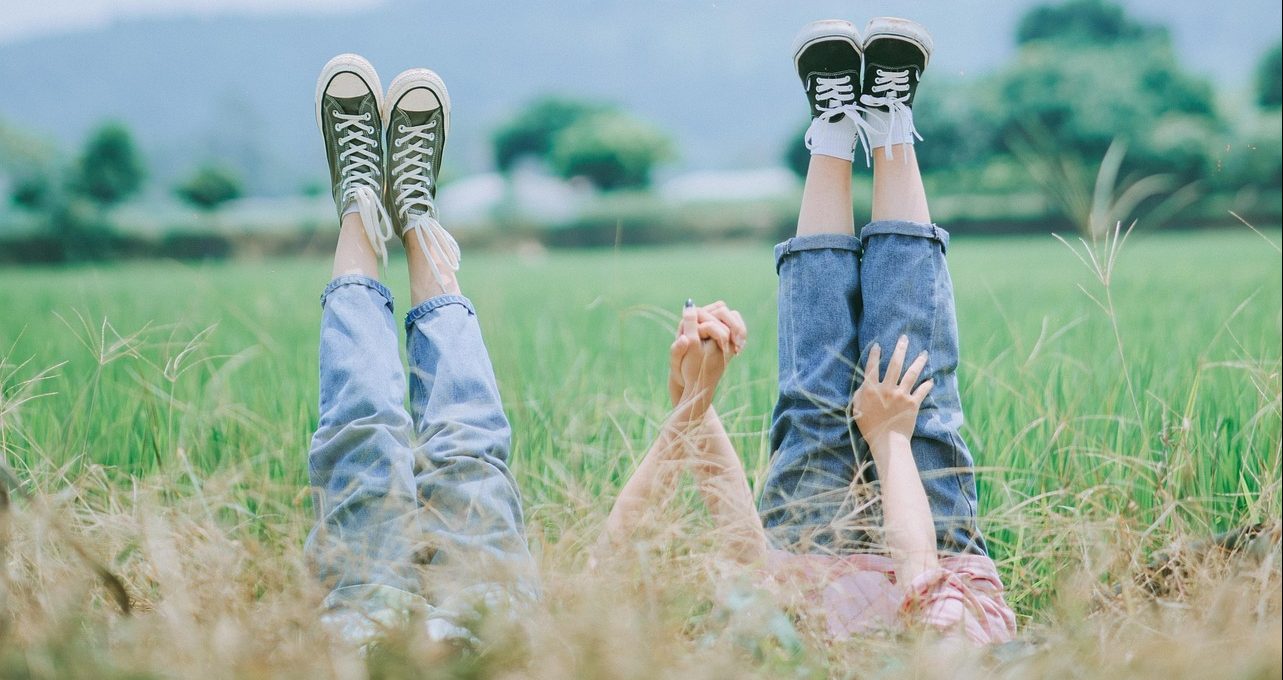
When I first began studying for my doctorate, this was one of the most memorable questions asked to myself and my colleagues by our teacher. “Do you feel your feet?” Yes, of course, I feel my feet! I’m standing on them, I feel them inside my shoes. “Yes, Professor. Yes, I feel my feet.” But then, she would ask us to really think about it. Be aware of our feet in our daily practice, in rehearsals, and especially in performance. Okay, I’ll bite!
So, I started thinking of “feeling my feet” from a body mapping perspective. Where are my feet? What is their function, particularly in relation to my playing? One evening as I was practicing, I began to really struggle with a very challenging passage. I felt so frustrated and angry with myself and my inability to succeed at playing this passage, and the tension in my muscles got worse and worse with every failed attempt. Suddenly, a voice in my head rang out, “feel your feet!” So, I stopped, took a deep breath, and felt my feet. I thought about how they were supporting my body from the very lowest points. I felt them touching the floor, the firm surface that we rarely consider at all but that is always supporting us. I began to feel grounded and supported, and the tension began to subside.
As my muscles began to release, I tried the passage again. Not so surprisingly, it was a bit less difficult to play. I took another deep breath, felt my feet again, and played the passage again a few more times. Each time, the passage was a little less of an obstacle for me. Was it perfect yet? Not even close! Was it miraculously less difficult? No, it was not. However, by thinking about my feet and allowing myself to be more grounded, my focus shifted away from the difficulty of the passage and toward the support system already in place to make that passage possible to play.
As musicians, we often develop a habit of just going through the motions to play all the notes. It is so easy to forget that there is more to playing our instrument than blowing air and moving fingers. Music is an athletic event. We have a whole body of bones and muscles that are trying to work together to make music happen naturally. We often focus so much of our attention on what our hands and fingers are doing, or how our lips, teeth, and tongue are directing the air and executing challenging articulations. While all of these things are important in our playing, they should also be supported by the larger systems in place that exist specifically for that reason: our arms and shoulders, our back and core, our diaphragm and abdominals for air support, our pelvis, hip joints, legs, and yes, our feet and toes.
FEELING YOUR FEET TO OPEN YOUR AWARENESS
This idea of “feeling your feet” also harkens back to a previous article where I discussed opening your awareness. When we become conscious of our feet and the ground that supports us, we open our awareness to more than just our face and hands and the music, becoming aware of the other parts of our body that are in place to help us achieve our musical intention. By doing this, we give ourselves the space to let the passage flow rather than trying to fit all the notes of a difficult passage into a small imaginary bubble that we create between our head, hands, and the music on the page. We begin to hear the music in the space and let the notes flow more freely and with less physical effort.
Next time you find yourself struggling with a difficult passage in your practice, I challenge you to take a deep breath and feel your feet. They are there to support you, both in life and in music. I’ve said this before, and I’ll reiterate it here: musical performance is an athletic event. When we begin to think of it in this way, then we start using our whole bodies to support the music we play and to better communicate our musical intention. And by opening our awareness to how our bodies are sending the music into the space we’re occupying, we create a freer, more enjoyable musical experience for ourselves and our audience by recognizing and honoring what we hear throughout the hall. So, let’s feel our feet, create space for our sound, open our awareness, and enjoy the ride!