

I can still vividly remember the excitement I felt when I picked up the flute for the very first time. What captivated me immediately was its sound, or, perhaps, more precisely, the extraordinary sensation of producing sound through breath in the uniquely direct and intimate way the flute demands. To this day, I continue to find this process both fascinating and deeply enigmatic.
From the very beginning, I became intensely curious about how sound production on the flute truly functions: how we develop a tone that is flexible, resonant, expressive, and stable in intonation, and how we sustain and refine that sound over time. Even now, I remain endlessly interested in listening to other flutists work on tone production. Perhaps this fascination comes partly from my belief that sound on the flute reveals something profoundly personal about us as musicians; because it is shaped so directly through breath, it becomes an extension of our inner voice.
This curiosity also became deeply personal for me. Following a dental injury in childhood, I underwent multiple jaw surgeries as an adult, lost a front tooth precisely where the flute rests against the chin, and today play with a substantial dental bridge. After these operations and the physical changes they brought, I essentially had to relearn how to play the flute from the beginning, returning to the most fundamental questions of sound production and rebuilding my relationship with the instrument almost from zero.
I also remember becoming deeply preoccupied in my teenage years and early twenties with the idea of producing a “beautiful” sound, although I was not entirely certain what that truly meant. Over time, my understanding of tone has changed profoundly. I no longer believe sound must be beautiful. What matters far more to me today is flexibility — the ability for tone to transform constantly according to color, character, expression, and musical intention. Sound may be bright or dark, focused or diffuse, metallic or warm, pure or richly inflected with vibrato. Ideally, it should function like a painter’s palette, capable of responding freely to every musical moment.
To cultivate this kind of flexibility, I gradually developed a small set of foundational exercises for my own daily practice—exercises that my students also work with extensively. Rooted in the central traditions of modern flute playing and tone development, they form the basis of the work I will discuss in the following sections in the hope that some of these ideas may also inspire a more reflective and detailed approach to sound in daily practice.
- MARCEL MOYSE: DE LA SONORITÉ NO.1

I find Marcel Moyse’s pedagogical thinking deeply inspiring because of the extraordinary logic with which he builds technique: truly, one step at a time. What appears simple often contains an immense depth of technical and musical understanding. The principle behind this exercise is straightforward: once we are able to produce an individual note, the next challenge is learning how to connect one note with another seamlessly. Moving between two notes separated by a semitone is the smallest and therefore most accessible shift, yet executing it successfully requires a refined awareness of the subtle differences in air speed, direction, focus, and support needed for each pitch.
By working chromatically downward from B natural and then ascending again through the registers, one gradually develops a clearer understanding of how airflow functions across the entire instrument and how the flute responds in different tessituras. For my own practice, I find it essential to work on this exercise without vibrato, as this allows me to hear the core of the sound more objectively and understand the exact quality and speed of air each note requires without additional coloring. I also pay close attention to keeping the breathing mechanism relaxed and free throughout. The ultimate goal is to achieve enough control and consistency to maintain an even, dynamic, and stable resonance, and coherent tonal color throughout all registers of the instrument.
For me, this is the very first exercise of my practice, a kind of daily check-in through which I reconnect with the instrument and establish the technical and physical foundation for everything that follows on that day.
- TAFFANEL – GAUBERT: 17 BIG DAILY EXERCISES, NO. 4

From all that is available in 17 Grands Exercices Journaliers, this is, perhaps, my absolute favorite, and it is the scale pattern I return to daily in my own practice. What I value most about it is the way it encourages a truly seamless legato across the entire range of the instrument, allowing each note to connect naturally and fluidly into an uninterrupted musical line.
I find it an exceptionally beautiful exercise for developing awareness and control of the airflow, constantly monitoring that the line remains even and uninterrupted without certain registers becoming heavier, louder, weaker, or more pressured than others. At the same time, it is important that the tonal quality retains its brightness and clarity throughout, particularly in the extreme high and low registers, where the sound can so easily lose focus or change character.
Varying the speed of the exercise also shifts the center of attention in interesting ways. At slower tempos, the focus often falls more on the continuity and quality of the legato, while the coordination and precision of the finger transitions become increasingly exposed at faster speeds. In this sense, the exercise remains endlessly flexible and revealing, despite its apparent simplicity.
- WORKING ON INTONATION
The final area I include even in the shortest daily work on sound is intonation. Developing a refined inner sense of pitch and cultivating real sensitivity in this area is essential not only for becoming a more sophisticated musician, but also for truly successful chamber music and orchestral playing. Intonation is, in many ways, one of the most subtle forms of listening.
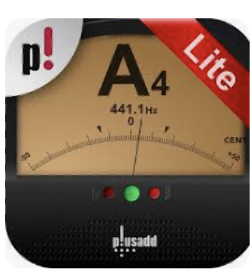
One of my greatest companions in this work is the Tuner Lite app. The program of this app allows me to select different tuning standards (442 Hz, 440 Hz, or whatever may be appropriate for a given context) and also to sustain a chosen reference pitch. These sustained tones become what I think of as “focus notes” around which I organize my listening.
For example, when practicing a C major scale, I might choose C, G, or E as a focus note and then play through the scale while ensuring that every pitch relates precisely and organically to that sustained sound. In many ways, this simulates the experience of playing with another musician and allows me to immerse myself completely in the relationships between pitches, resonance, and harmonic balance.
The deeper one goes into this kind of work, the more one realizes how incredibly sensitive and complex the system of intonation truly is. At the same time, it can become unexpectedly absorbing: the level of concentration required, combined with the physical sensation of adjusting and refining sound in real time often creates a remarkable sense of flow and focus.
I hope some of these ideas might serve as inspiration and perhaps encourage a calmer, more reflective, and more detailed approach to working with sound—something which, for me, remains one of the greatest pleasures and deepest fascinations of music making.